Dog Ear Infection Treatment (and What to Do If You Can't Afford a Vet)
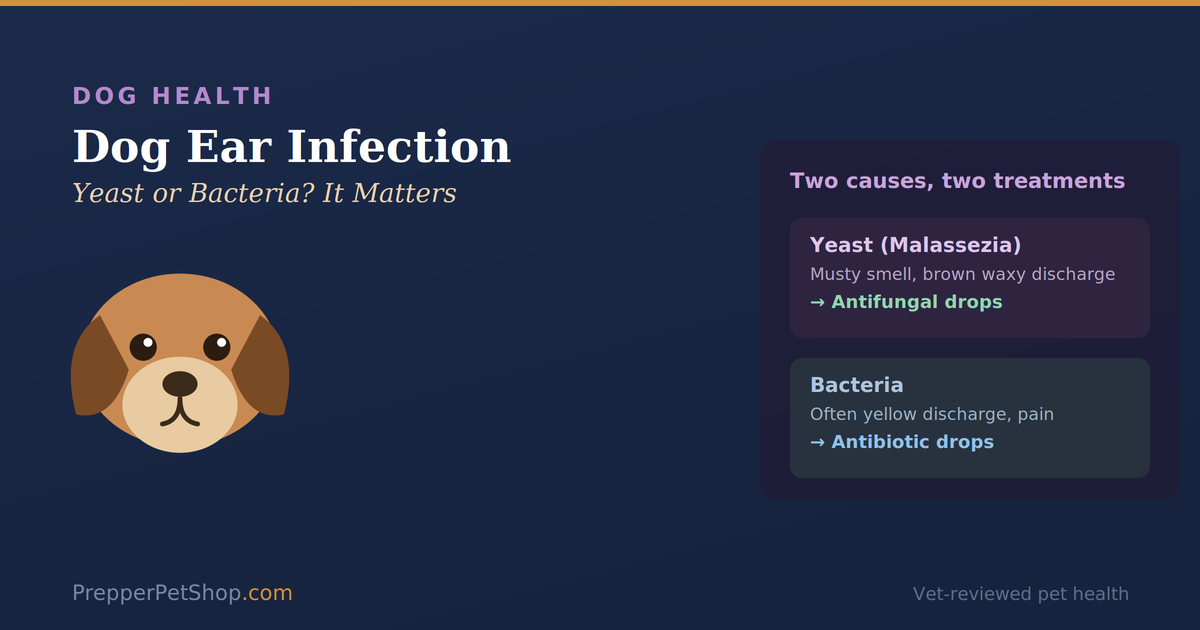
This page exists because "dog ear infection home remedy" searches lead people to pour all kinds of things into a dog's ear, some useless, some harmful. Here's the honest, vet-sourced picture: the diagnosis genuinely determines the treatment, so guessing wastes time and money and prolongs a painful problem. We'll cover how to recognize it, what's safe at home, and, because affording care is the real barrier for many: how to keep the cost down.
How to recognize an ear infection
- Head shaking and ear scratching, often persistent.
- A smell. Musty/corn-chip (classic yeast) or fouler.
- Discharge, brown and waxy (often yeast) or yellow (often bacterial).
- Redness, swelling, or heat in the ear canal or flap.
- Pain, flinching when the ear is touched, tilting the head.
- Rubbing the ear on furniture or the floor.
Floppy-eared breeds (Cocker Spaniels, Basset Hounds, Labs, Golden Retrievers, Beagles) are especially prone, because the ear shape traps moisture and warmth.2
The key point: yeast vs. bacteria
Most dog ear infections are otitis externa (outer-canal inflammation), and successful treatment depends on identifying and controlling the underlying cause, not just the surface infection.5 The single most useful thing to understand:
Different cause, different cure
Yeast (usually Malassezia): musty smell, brown waxy discharge: needs an antifungal.3
Bacteria: often yellow discharge and more pain. Needs an antibiotic.5
You can't reliably tell which by looking, and many are mixed. That's why vets do an ear swab (cytology) under a microscope, and often reach for a combination drop plus a steroid to calm inflammation.1 Grabbing the wrong product delays healing.
What's safe to do at home
- Use a vet-approved ear cleaner to gently remove wax/debris, this supports treatment and helps prevention, but doesn't cure an active infection.3
- Keep ears dry, especially after swimming or baths (dry gently; don't jam anything deep in the canal).
- Manage the underlying cause your vet identifies (often allergies).
How the vet treats it
- Otoscope exam. Look down the canal, check for redness, discharge, foreign material, and whether the eardrum is intact (this changes which meds are safe).5
- Ear swab (cytology), identify yeast, bacteria (rods vs. cocci), or a mix.5
- Cleaning, flush out wax and debris so medication can reach the canal lining (topicals get inactivated by discharge).1
- Targeted medicated drops — matched to the swab, often antibiotic and/or antifungal plus a steroid.5
- Recheck — a follow-up swab confirms it truly cleared. Bacterial/yeast cases often need rechecks over 2–4 weeks; chronic cases can take longer.1
If you can't afford a vet
Here's the reassuring part: an uncomplicated ear infection is one of the more affordable vet visits — an exam, a swab, and a medicated drop — and treating it early is far cheaper than letting it become a chronic or middle-ear problem that needs prolonged care. If cost is still the obstacle:
- Low-cost and nonprofit clinics often handle routine ear infections affordably.
- Telehealth vets can assess and, where appropriate, guide next steps for less than an ER visit.
- Payment plans and assistance funds — see our guides on vet costs and organizations that help with vet bills.
What we don't recommend is guessing with store-bought drops — treating a bacterial infection with an antifungal (or vice versa) wastes the money you were trying to save and leaves your dog in pain longer.
When it's urgent
Preventing repeat infections
- Dry ears thoroughly after swimming/baths.
- Clean with a vet-approved cleaner on the schedule your vet suggests (over-cleaning can irritate).
- Address allergies — the most common underlying driver of recurrent ear infections.2
- For floppy-eared breeds, routine ear checks catch problems early.
Frequently asked questions
Can I treat it at home without a vet?
Only supportively (vet-approved cleaner, keep ears dry). You can't tell yeast from bacteria by looking, and they need different drugs — a swab is what matches the right medication. If cost is the issue, low-cost clinics beat guessing.
Yeast or bacteria — how do I know?
Often you can't by appearance; vets swab to check. Roughly: yeast = musty smell, brown waxy discharge; bacteria = yellow discharge, more pain; many are mixed.
What can I put in the ear at home?
A vet-approved cleaner for wax/debris — not a cure. Never peroxide, alcohol, or human antifungal creams (toxic if the eardrum is ruptured).
Why does my dog keep getting them?
Usually an underlying cause — allergies most often, plus floppy-ear anatomy, moisture, hormones, or mites. Treating the infection without the cause is why they recur.
How much does treatment cost?
An uncomplicated case is a relatively cheap visit (exam, swab, drops), and far less than a chronic infection later. Low-cost clinics and telehealth help if money's tight.
Can it go away on its own?
Unlikely and risky — it can worsen, become chronic, or damage the ear. Prompt treatment is kinder and cheaper.
Is a groomer's cleaning enough?
No — for an active infection a groomer can't diagnose the organism or check the eardrum. You need a swab and targeted meds.
How we reviewed this article
This guide follows the Merck Veterinary Manual, PetMD, and Vetster, and it centers the yeast-vs-bacteria distinction because getting it wrong is the most common, costly home-treatment mistake. Because affordability is the real barrier for many readers, we've included honest low-cost guidance rather than pretending a store-bought drop is a cure. Every clinical claim is numbered to a source below. This article was medically reviewed by Dr. Marc Dhumeaux (DVM, Dip. ACVIM & ECVIM-CA (Small Animal Internal Medicine)) on September 14, 2026. The reviewer verified the clinical accuracy of the guidance; PrepperPetShop is responsible for the final published text.
Sources & references
- Merck Veterinary Manual. Ear Infections and Otitis Externa in Dogs. Swab diagnosis, cleaning before topical treatment, antibiotic+anti-inflammatory for bacterial, 2–4 week rechecks. merckvetmanual.com
- Vetnique / veterinary guidance. Dog Ear Yeast Infection. Floppy-ear breed risk, allergy as top driver, diagnosis and treatment. vetnique.com
- Veterinary clinical guidance (Merck-cited). Dog Ear Yeast Infection. Yeast needs antifungal not antibiotic; OTC cleaners aren't cures; human creams/peroxide unsafe, toxic if eardrum ruptured. webvet.com
- PetMD. Yeast Infections in Dogs (Ears, Skin, Paws). Antifungal topical + anti-inflammatory, medicated cleaning, underlying causes. petmd.com
- Veterinary treatment overview (Merck-aligned). Dog Ear Infection Treatment. Otoscope + cytology + cleaning + targeted drops + recheck; groomer clean not a substitute. webvet.com
- Vetster. How to Treat and Prevent Yeast Ear Infections in Dogs. Cytology as primary test; treat underlying cause; follow-up care. vetster.com
Sources current as of September 2026. Educational content, not a substitute for veterinary care.