Sick Dog or Cat? Start Here: Symptom Checker and When to Worry
Dogs and (especially) cats are wired to hide illness, so by the time something looks obviously wrong they're often already unwell. Learning to read the early, subtle signs. And knowing which are true emergencies, is the most useful skill a pet owner can have. This is the page to start on when you're not sure what you're dealing with.
Red flags: go to an emergency vet now
- Difficulty breathing, labored, open-mouth (in cats), gasping, or blue-tinged gums.
- Pale/white, blue/grey, bright-red, or yellow gums.
- Collapse or inability to stand; seizures.
- Bloat signs in large dogs: a swollen, hard belly with unproductive retching.
- A male cat straining to urinate with little or nothing coming out. Possible fatal blockage.
- Suspected poisoning (see dog ate chocolate), heavy bleeding, or a suspected broken bone.
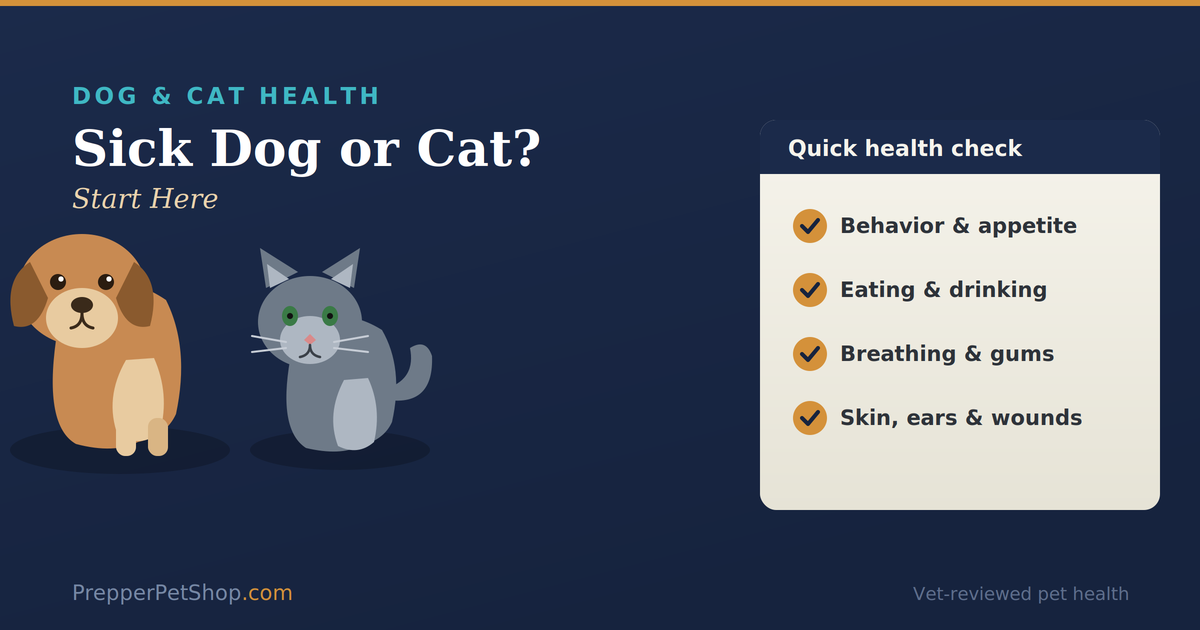
The quick health check
- Behavior, hiding, clingy, restless, or dull versus their normal self?
- Appetite & thirst, eating and drinking normally, or refusing food or drinking much more/less?
- Gums: press a spot: healthy is pink and refills to pink in ~2 seconds. Pale, blue, bright-red, or yellow are all warning colors.
- Breathing. Quiet and easy, or fast, labored, coughing, or open-mouthed (a red flag in cats)?
- Belly, soft, or swollen, hard, or painful to touch?
- Bathroom, normal, or diarrhea, vomiting, straining, or a change in urine?
- Skin, ears & wounds: scratching, head-shaking, smell, lumps, hot spots, cuts, or swellings?
Match the sign to the cause
| What you're seeing | Common direction | Guide |
|---|---|---|
| Ate chocolate, grapes, or something toxic | Possible poisoning — act fast | Dog Ate Chocolate |
| Straining to pee, frequent small amounts, licking, accidents | Urinary tract infection / issue | Dog UTI Remedies |
| Head-shaking, scratching an ear, odor, discharge | Ear infection | Dog Ear Infection |
| A cut, scrape, or minor wound | Wound care | Dog Wound Care |
| A cat with a swelling, lump, or draining sore (often after a fight) | Abscess | Cat Abscess |
| Worried about the cost of care | Cost & assistance | Vet Costs & Help |
What to do while you decide
- Keep your pet calm and comfortable, somewhere quiet and a comfortable temperature.
- Note what you're seeing — signs, timeline, appetite, bathroom, anything unusual eaten — which makes any vet call far more useful.
- Don't give human medications — many (ibuprofen, acetaminophen, and others) are toxic to pets.
- For cats especially, don't 'wait it out' on appetite — a cat not eating for 24–48 hours can develop a serious liver problem.
When cost is the barrier
If what's stopping you from getting care is money, you're not alone and there are real options — low-cost clinics, payment plans, and charitable assistance funds. Don't let cost lead to doing nothing; see our guides on emergency vet costs, spay/neuter costs, and organizations that help with vet bills.
Frequently asked questions
What are the first signs a dog or cat is sick?
Changes in normal behavior — hiding or clinginess, low energy, less appetite or water, altered bathroom habits. Cats hide illness especially well, so subtle changes matter. Trust a sense that they 'aren't themselves.'
Can it wait, or is it an emergency?
Go now for trouble breathing, abnormal gum color, collapse, seizures, bloat signs, a male cat straining to pee, suspected poisoning, heavy bleeding, or a suspected fracture. When unsure, call an emergency vet and describe the signs.
What do healthy gums look like?
Pink and moist, refilling to pink in about 2 seconds when pressed. Pale/white, blue/grey, bright-red, or yellow are all warning signs and a fast way to judge severity.
My pet isn't eating — how long is too long?
A dog skipping one meal but otherwise bright is usually okay; more than ~24 hours, or appetite loss with other signs, warrants a call. Cats are more urgent — not eating for 24–48 hours risks a serious liver condition.
Symptom checker or just call the vet?
A checker is triage to decide urgency and what to report — not diagnosis. For any red flag or uncertainty, call a vet. Use guides to organize what you see, not to replace care.
When is straining to pee an emergency in cats?
Always urgent, especially male cats — possible urinary blockage, life-threatening within a day or two. Go to an emergency vet now.
How we reviewed this article
This hub draws on veterinary references and links to our individual dog and cat guides, each separately sourced. It's built for fast, safe triage with clear emergency red flags, and it deliberately flags the cat-specific urgencies (appetite loss, urinary blockage) that general checklists miss. This article was medically reviewed by Dr. Marc Dhumeaux (DVM, Dip. ACVIM & ECVIM-CA (Small Animal Internal Medicine)) on September 12, 2026. The reviewer verified the clinical accuracy of the guidance; PrepperPetShop is responsible for the final published text.
Sources & references
- Merck Veterinary Manual. Dog Owners and Cat Owners sections — emergency signs, gum color/capillary refill, common conditions. merckvetmanual.com
- American Veterinary Medical Association (AVMA). Pet emergency care — when to seek emergency treatment. avma.org
- Individual dog and cat guides on this site, each independently sourced to Merck, ASPCA, and veterinary references (linked in the table above).
Sources current as of September 2026. Educational content, not a substitute for veterinary care. If your pet shows any red-flag sign, seek veterinary help.