Cat Abscess Treatment: Safe Home Care and When to See a Vet
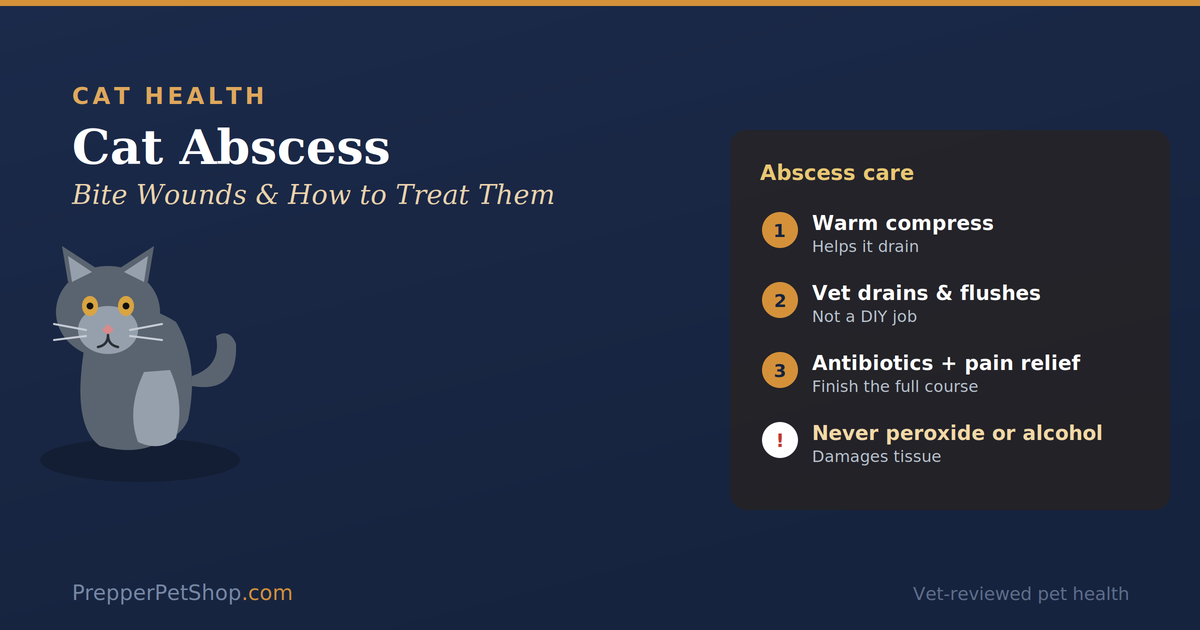
Cat abscesses look and smell dramatic: a sudden painful lump, sometimes bursting into foul-smelling pus. But they're common and very treatable when handled right. The important thing to understand up front is which parts you can help with at home and which genuinely need a vet, because the wrong home "treatment" (squeezing it, dousing it in peroxide) makes things worse. Here's the accurate picture from veterinary sources.
Why cat bites turn into abscesses
A cat's canine teeth are narrow and sharp, so a bite makes a small, deep puncture that seals over at the surface within a day or two, trapping mouth bacteria in the warm, low-oxygen tissue underneath.3 The bacteria multiply, the body walls off the infection, diseased tissue and immune cells liquefy into pus, and you get an abscess. Because the skin heals so fast, owners often see nothing until the swelling appears days later, and cat bites are why Merck notes these wounds "must be treated as an abscess."1
How to recognize one
- A painful, warm swelling under the skin. Commonly on the face/cheeks, legs, or base of the tail, where cats bite each other in fights.3
- Before it ruptures: fever, listlessness, and appetite loss (the infection is incubating).3
- A small scab from the original tooth puncture, sometimes still visible on the swelling.
- Once it ruptures: foul-smelling yellow-green pus, and the fever often breaks.
- Limping or tenderness if it's on a leg or paw.
What you can safely do at home
Supportive care, not a substitute for the vet:
- Warm compress. Soak a clean cloth in warm (not hot) water, wring it out, and hold it gently on the area for 5–10 minutes, once or twice a day as your vet directs. The heat liquefies diseased tissue so it can drain.2
- Keep a ruptured wound clean with a vet-recommended, non-stinging wound wash.
- Give prescribed medication exactly as directed, and finish the full antibiotic course.
- If a drain was placed, clean its holes as instructed (often twice daily for several days) until the vet removes it.4
What the vet will do
Standard treatment is source control plus antibiotics:1
- Drain and flush. The vet lances the abscess (or reopens the bite scab), drains the pus, and thoroughly flushes the pocket, often under sedation because it's painful. The site is usually left open to keep draining, and larger ones may get an indwelling drain.2
- Debride if needed. Older or large abscesses may need dead tissue trimmed and stitches.4
- Antibiotics + pain relief. Cat-bite infections are often polymicrobial (Pasteurella and others), so antibiotics are important — commonly amoxicillin-clavulanate (Clavamox), or a long-acting injectable (Convenia) for cats that won't take pills. Pain medication matters because abscesses hurt.2
- FeLV/FIV testing may be recommended after a bite, since these viruses spread mainly through bites.3
With proper drainage and antibiotics, most abscesses heal in about one to two weeks, often improving within five to seven days.2
If cost is a concern
An abscess needs treatment, but the cost of drainage and antibiotics can be a worry. Don't leave it untreated — a partially-drained or recurring abscess costs more in the long run. See our guides on vet costs and help with vet bills; many areas have low-cost clinics that can handle a routine abscess affordably.
Prevention
- Keep cats indoors or supervised — it dramatically cuts fight wounds.
- Spay/neuter reduces roaming and territorial fighting (see spay/neuter costs).
- Vaccinate (including rabies) and keep FeLV/FIV status known.
- Check outdoor cats over for puncture wounds after any suspected scuffle, and see a vet early — treating a fresh bite can head off an abscess.
Frequently asked questions
Can I treat a cat abscess at home?
Only supportively — warm compresses for a ruptured abscess. Draining, antibiotics, and pain relief need a vet. Lancing or squeezing it yourself risks spreading infection and missing needed antibiotics.
What does it look like?
A painful warm swelling, often on the face, legs, or tail base, sometimes with a tooth-puncture scab; fever and appetite loss before it ruptures, foul pus after.
Why do bites cause abscesses?
Sharp teeth make deep punctures that seal over fast, trapping bacteria underneath to multiply into pus. The quick surface healing is why owners notice late.
Should I pop or drain it myself?
No — proper drainage needs lancing, flushing, often sedation, and dead-tissue removal. If it already ruptured, gently clean it and use warm compresses, but still see a vet for antibiotics.
How do I use a warm compress?
Warm (not hot) damp cloth, 5–10 minutes once or twice daily as directed, to help drainage. Never peroxide or alcohol.
Does it need antibiotics?
Almost always — bite infections are often polymicrobial. A vet may use oral Clavamox or injectable Convenia. Finish the course.
How long to heal?
Usually one to two weeks with drainage and antibiotics, often better in five to seven days. Clean any drain until removed.
FeLV/FIV testing after a bite?
Worth discussing — both spread mainly by bites; testing ~60 days post-bite is often advised. Indoor living and vaccination reduce risk.
How we reviewed this article
This guide follows the Merck Veterinary Manual, VCA, PetMD, and VIN Veterinary Partner rather than DIY advice, and it's explicit about the home "treatments" to avoid (squeezing, peroxide) that can worsen an abscess. Every clinical claim is numbered to a source below. This article was medically reviewed by Dr. Marc Dhumeaux (DVM, Dip. ACVIM & ECVIM-CA (Small Animal Internal Medicine)) on September 13, 2026. The reviewer verified the clinical accuracy of the guidance; PrepperPetShop is responsible for the final published text.
Sources & references
- Merck Veterinary Manual. Management of Specific Wounds in Small Animals. Cat bites treated as abscess with culture, debridement, antibiotics, drainage. merckvetmanual.com
- VCA Animal Hospitals. Fight Wound Infections in Cats. Draining/flushing, antibiotics (Clavamox, Convenia), pain relief, drain care, 5–7 day/2-week healing. vcahospitals.com
- VIN Veterinary Partner. Abscesses in Cats from Bite Wounds. Mechanism (sealed punctures), locations, fever/listlessness, warm packing, FeLV/FIV note. veterinarypartner.vin.com
- PetMD. Cat Abscesses. Outpatient vs surgical drainage, antibiotic selection, drain management. petmd.com
- Ask A Vet (Merck-cited). Cat Bite Abscesses. Emergency signs (penetrating chest/abdomen, collapse, pale gums), polymicrobial/Pasteurella, source control. askavet.com
- Veterinary wound-care guidance. Warm-compress technique; never use hydrogen peroxide or rubbing alcohol on an abscess. reference
Sources current as of September 2026. Educational content, not a substitute for veterinary care.