Chicken Diarrhea: What's Normal and What's Not
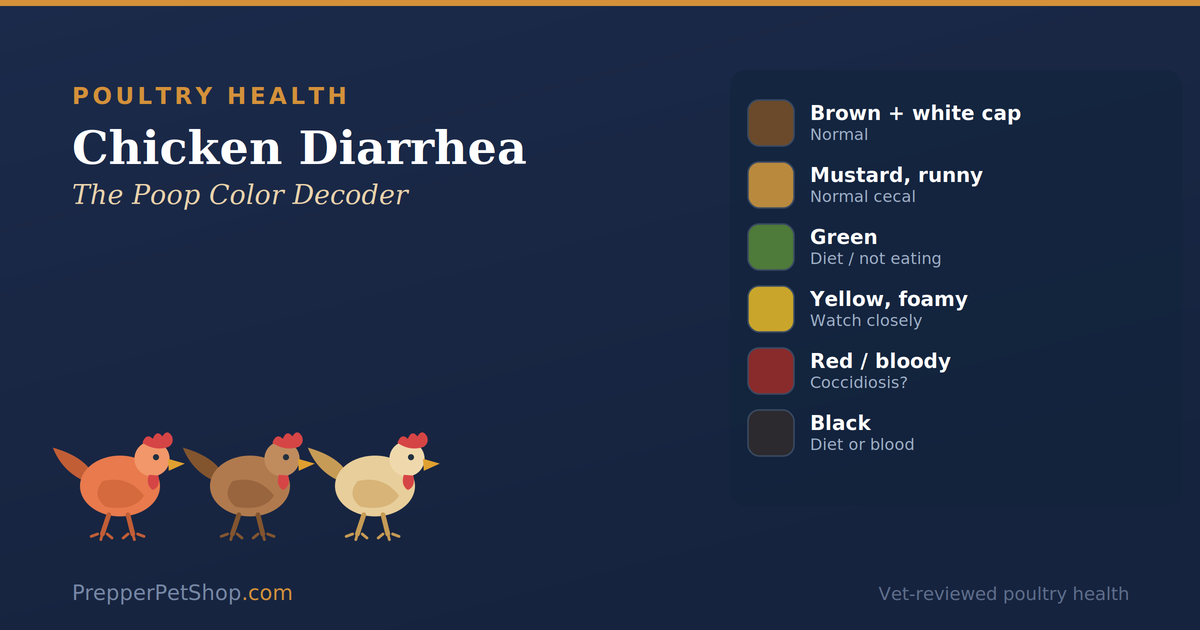
Chicken droppings are genuinely one of the most confusing things for new keepers, because a perfectly healthy chicken produces some poops that look downright alarming. So this guide does two jobs: first, help you tell normal from a real problem, and second, tell you what to actually do when it is a problem — grounded in veterinary sources, not panic.
First: is it even diarrhea?
Here's the single most reassuring fact on this page. Several times a day, a chicken empties its ceca (two pouches in the gut) and passes a normal cecal dropping: runny, sticky, mustard-brown to dark brown, and strikingly foul-smelling.2 It looks nothing like the tidy brown-with-white-cap dropping people expect, and it sends countless first-time keepers into a spiral. It's completely normal and needs no treatment — except maybe an air freshener.2
Normal cecal dropping vs. true diarrhea
Normal cecal: occasional (a few times daily), runny, sticky, mustard-to-brown, very smelly — but the bird is bright, active, eating, and the other droppings are normal.
True diarrhea: persistently watery droppings across many poops, often with a soiled/pasted vent, and frequently other signs (lethargy, reduced appetite, ruffled feathers).
The chicken poop color decoder
Color helps, but with one honest caveat: some colors have both a harmless and a serious explanation, so color alone rarely gives a diagnosis — you read it alongside the bird's overall condition.5
- Brown with a white cap — the classic normal dropping.
- Mustard/brown and runny (occasional) — normal cecal dropping.
- Green — usually diet (lots of greens), but can mean a bird that isn't eating, or illness, if persistent.5
- Yellow & foamy — can signal infection or a gut problem; watch closely.5
- Red or bloody — either normal shed intestinal lining or blood from coccidiosis. You often can't tell by eye, so treat bloody droppings in a sick bird as urgent.5
- Black — often diet (blackberries, blueberries, wood ash), but can be digested blood in a sick bird.5
The one to take seriously: coccidiosis
If there's blood or mucus in the diarrhea — especially in young birds — think coccidiosis first. It's a protozoal parasite (Eimeria) that attacks the intestinal lining, and it can be fatal.16 Signs beyond bloody/mucusy diarrhea include lethargy, ruffled feathers, huddling, a pale comb, poor appetite, and slow growth in chicks.3
Treating ordinary diarrhea, step by step
Step 1 — Hydrate
The immediate risk with any diarrhea is dehydration. Provide clean water with poultry electrolytes right away. This is the single most important supportive step while you sort out the cause.
Step 2 — Remove the likely cause
Most non-infectious diarrhea traces to something simple:
- Dietary — they gorged on greens, watery treats (watermelon, cucumber), or something new. Simple, supportive care; it usually clears in 24–36 hours.2
- Heat — hot weather means more drinking and looser droppings. Harmless; ensure cool clean water.
- Spoiled or moldy feed / dirty water — toss it, clean waterers, start fresh.
Step 3 — Support gut recovery
Add probiotics (or a little plain live yogurt) to help rebalance gut flora, and keep the coop and especially any brooder scrupulously clean to prevent reinfection, which matters enormously with coccidiosis.2
Step 4 — Know when it's a vet visit
See a vet if the diarrhea is bloody or mucusy, persists beyond a day or two, or comes with a sick-looking bird (lethargy, pale comb, weight loss, not eating). A fecal test identifies coccidiosis, worms, or a bacterial cause and points to the right treatment — guessing wastes time a sick bird may not have.
A note on antibiotics
Most chicken diarrhea does not need antibiotics — it's dietary, heat-related, or normal cecal droppings. Coccidiosis is treated with amprolium, which is an anticoccidial, not an antibiotic.4 Antibiotics are only right for a confirmed bacterial cause, which is a veterinary decision; using them by default can disrupt gut flora without touching the real problem.
Prevention
- Keep waterers clean and feed dry and mold-free.
- Keep brooders and coops clean and not overcrowded — crowding concentrates coccidia oocysts.4
- Use medicated (amprolium) chick starter if coccidiosis has been a problem, and introduce new greens/treats gradually.
- Quarantine new birds before adding them to the flock.
Frequently asked questions
Is my chicken's runny poop normal?
Often yes — the normal cecal dropping is runny, sticky, mustard-to-brown, and very smelly, passed a few times daily. True diarrhea is persistent watery droppings, usually with other signs like a soiled vent or lethargy.
What does chicken diarrhea look like?
Consistently loose/watery droppings that don't hold shape, often with pasted vent feathers. Bloody or mucusy versions are a red flag for coccidiosis. One-off loose poops after treats or heat are usually harmless.
What do the poop colors mean?
Brown-with-white-cap is normal; mustard-runny is normal cecal. Green is usually diet; yellow-foamy can mean infection; red/bloody can be shed lining or coccidiosis blood; black can be diet or digested blood. Persistent abnormal color in a sick bird warrants a vet.
How do I know if it's coccidiosis?
Bloody or mucusy diarrhea (especially in chicks) plus lethargy, ruffled feathers, pale comb, huddling, and poor appetite. It's fast and can be fatal; treat urgently with amprolium and confirm with a vet fecal test.
What's the treatment?
Electrolytes in clean water, remove the cause (spoiled feed, watery treats, heat), add probiotics. For coccidiosis, amprolium plus a scrupulously clean environment. Simple dietary diarrhea clears in 24–36 hours; bloody or persistent needs a vet.
When should I worry?
Blood or mucus, diarrhea lasting more than a day or two, or a sick-looking bird. Chicks with bloody diarrhea are an emergency.
Can heat cause it?
Yes — more drinking in hot weather means looser droppings. Usually harmless; provide cool clean water.
Do I need antibiotics?
Usually not. Most cases are dietary, heat-related, or normal. Coccidiosis uses amprolium (not an antibiotic). Antibiotics are only for a confirmed bacterial cause, per a vet.
How we reviewed this article
This guide draws on the Merck Veterinary Manual and established poultry-health resources rather than guesswork, and it deliberately leads with the normal-cecal-dropping distinction because mistaking it for illness is the most common error keepers make. Every load-bearing claim is numbered to a source below. This page is scheduled for review by a licensed veterinarian; the reviewer's name and date will appear here once complete.
Sources & references
- Merck Veterinary Manual. Coccidiosis in Poultry. Eimeria biology, severe/bloody diarrhea, fatality, 10–14 day recovery, diagnosis by fecal flotation. merckvetmanual.com
- The Happy Chicken Coop. Diarrhea in Backyard Chickens. Normal cecal droppings, dietary diarrhea resolving in 24–36 hrs, coccidiosis needing prompt treatment, clean brooder. thehappychickencoop.com
- Grubbly Farms. Coccidiosis in Chickens: Symptoms, Treatment & More. Symptom list (bloody/watery diarrhea, lethargy, pale comb, huddling), age-specific signs. grubblyfarms.com
- Freedom Ranger Hatcheries. Coccidiosis & Your Chickens. Amprolium as standard treatment, treat whole flock, reddish droppings can be normal cecal shedding, crowding raises risk. freedomrangerhatchery.com
- Chickens and More. Chicken Diarrhea: Common Causes. Poop-color decoder (green, yellow, red, black meanings) and cecal-dropping identification. chickensandmore.com
- Grubbly Farms. Coccidiosis in Chickens: Causes, Treatment and Prevention. Eimeria transmission via droppings, intestinal damage, treat-early guidance, and that reddish droppings aren't always coccidiosis. grubblyfarms.com
Sources current as of September 2026. Educational content, not a substitute for veterinary care.